
Call Us
562.254.8711 Call Us
562.254.8711
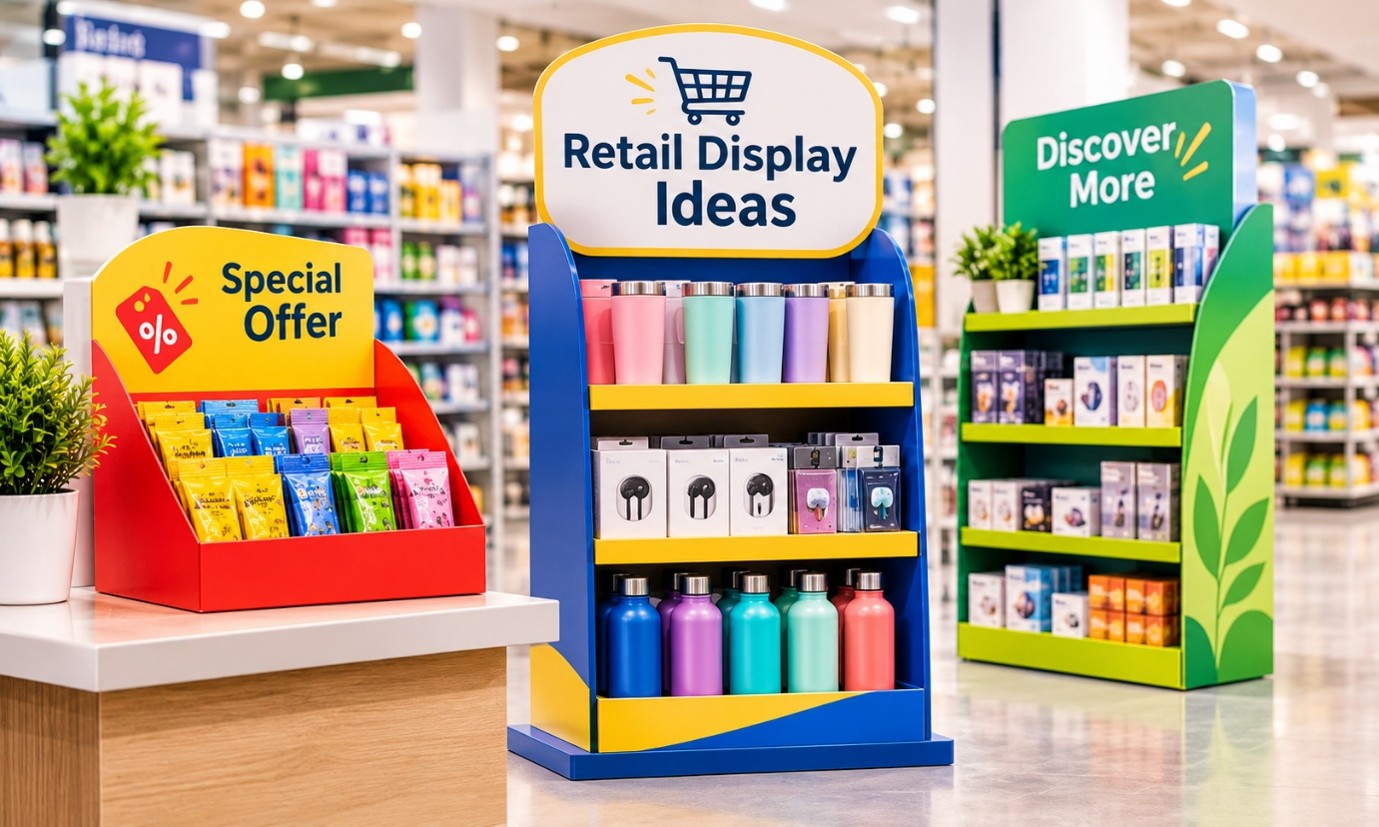
Summary: Discover twenty strategic retail display ideas that can strengthen in-store merchandising and create more engaging shopping experiences. From entrance displays and endcaps to interactive demonstrations and modular structures, explore practical ways to improve product visibility, guide customer discovery, use retail space effectively, and keep displays aligned with changing campaigns across different retail environments.
An effective retail display does more than showcase products. It influences how shoppers discover merchandise, understand product benefits, and make purchasing decisions. Well-planned retail display strategies combine shopper behaviour, product positioning, visual communication, and structural design to create a more engaging in-store experience. From introducing new products to improving the visibility of established merchandise, the right display can help retailers make better use of valuable floor and shelf space.
Successful merchandising also requires practical planning. Product dimensions, material strength, display placement, replenishment, and campaign objectives all influence performance. Here are 20 strategic ideas to help retailers improve their in-store presentations.
The entrance provides an opportunity to establish the store’s visual identity and introduce shoppers to featured merchandise. Use this space for seasonal collections, new arrivals, or promotional products that deserve immediate attention. Keep the arrangement focused rather than displaying too many unrelated items. The display should attract interest without obstructing entrances or customer movement.
New merchandise can become overlooked when placed among familiar products. A dedicated launch area gives shoppers a clear reason to explore something different. Use prominent product positioning, concise benefit statements, and recognizable brand graphics to communicate what makes the launch relevant. Keep the presentation consistent with the product’s packaging and wider marketing campaign.
Floor displays provide an independent merchandising space outside standard shelving. They work well for product launches, promotional collections, and merchandise requiring greater visibility. Consider the display’s footprint, height, and expected product load before choosing its location. A stable base and appropriately supported shelves help prevent bending or instability during regular retail use.
Countertop displays are useful for compact merchandise such as cosmetics, snacks, accessories, and personal care products. Their placement near payment areas or relevant product categories can encourage additional purchases. Open-front compartments and angled product holders make items easier to identify and retrieve while keeping the counter organized.
Endcaps offer visibility at aisle intersections and can introduce products to shoppers browsing an entire category. Use them for seasonal merchandise, promotional bundles, or high-priority products. Plan the display around the available width, shelf depth, and product height. Keep the main message prominent so shoppers can understand the offer without stopping to read extensive promotional copy.
Stepped shelves, raised platforms, and tiered compartments create visual depth while helping products remain visible. This approach is particularly useful when packaging varies in height. Place smaller items where they are not hidden behind taller products, and ensure each level has sufficient support. Shelf spans and load distribution should be considered to prevent sagging under product weight.
Grouping products from the same collection creates a coherent presentation. A skincare display, for example, could feature cleansers, moisturizers, and complementary treatments together. Consistent packaging colours and organized product arrangements help shoppers recognize the collection. This approach also makes it easier to communicate a product range rather than promoting individual items in isolation.
Cross-merchandising brings together products from different categories that serve a related purpose. Batteries near electronic accessories or travel-size toiletries near luggage products are practical examples. Unlike collection-based merchandising, this approach focuses on a shared customer need. Clear product grouping helps shoppers recognize the connection and discover useful additions to their purchases.
Seasonal displays allow retailers to respond to changing customer interests and purchasing occasions. Holiday accessories, summer essentials, and back-to-school supplies can all benefit from timely presentation. Plan the structure around expected product changes. Removable graphics, adjustable compartments, and interchangeable headers can make seasonal updates easier without replacing the entire display.
Some products require demonstration before shoppers understand their features or benefits. Sample stations, working product demonstrations, and touch-and-feel displays can encourage closer engagement. Design interactive elements to withstand repeated handling, and provide enough space for customers to explore them safely. Clear instructions can also help shoppers understand how to use the demonstration.
A display should communicate essential information quickly. Use readable pricing, concise benefit statements, and clear product labels. Establish a visual hierarchy in which the main product or promotional message receives the most attention, followed by supporting information. Avoid excessive copy, which can make the display difficult to understand at a glance.
Consistent colours, typography, and imagery help shoppers recognize a brand across different retail environments. Use graphic elements that complement the product packaging instead of competing with it. Print quality and finishing also matter, particularly when displays are positioned close to shoppers. Appropriate coatings or lamination can help protect printed surfaces from routine handling.
Observe how shoppers enter aisles, navigate between categories, and approach checkout areas. Position displays where they support natural shopping patterns and introduce relevant merchandise at useful decision-making points. Consider sightlines, queue direction, walking clearance, and access to nearby shelves. The goal is to improve product discovery without interrupting movement through the store.
Window displays communicate a store’s offering before customers enter. Feature a focused product selection, seasonal theme, or new collection that reflects the brand’s identity. Consider viewing distance, natural lighting, product height, and reflections when planning the arrangement. Keep important merchandise visible from outside and refresh the presentation as campaigns change.
Standard fixtures do not always accommodate unusual product dimensions, specific merchandising requirements, or distinctive brand presentations. Custom POP displays can be developed around product size, weight, retail placement, and campaign objectives. Countertop units, floor displays, pallet displays, and sidekicks each offer different ways to present merchandise.
The structure should be engineered for its intended use. Corrugated board grade and flute profile influence strength, while shelf spans, support panels, locking tabs, and reinforced bases contribute to stability. Die-cutting and folding details also affect assembly and fit. Prototyping helps identify structural weaknesses and improve the design before full production.
Material selection affects appearance, durability, cost, and functionality. Corrugated board offers flexibility for many temporary and promotional displays, with different flute profiles and board combinations available for varying load requirements. Paperboard can suit lighter products and smaller countertop units, while longer-term or heavier-duty applications might require reinforced or mixed-material structures.
Consider product weight, expected display lifespan, transportation conditions, and the retail environment before finalizing specifications. The material should support both the visual concept and the practical demands of the display.
A display can lose its impact when stock becomes difficult to access or arrange. Include suitable openings, compartment dimensions, and stock capacity so retail teams can replenish products efficiently. Consider how items will be removed from the front and how remaining stock will sit after repeated handling. Practical replenishment design helps maintain a neat presentation throughout the day.
Lighting can emphasize product features, create visual contrast, and draw attention to featured merchandise. Integrated lighting or strategically positioned store fixtures can help highlight specific display areas. Account for power access, heat generation, cable management, maintenance, and customer safety when incorporating electrical elements into a display.
Brands often run multiple promotions or introduce changing product assortments throughout the year. Modular shelves, removable graphics, interchangeable headers, and adjustable compartments allow displays to evolve with these requirements. Flat-pack construction can also simplify transportation and storage, while preassembled formats can reduce setup requirements at retail locations. The right approach depends on shipping costs, assembly resources, and campaign scale.
A display should be evaluated through measurable merchandising outcomes, not appearance alone. Track product sales, promotional performance, customer engagement, and results across different display locations. Compare arrangements over similar trading periods to understand which placements and product combinations perform best. Use the findings to refine product selection, messaging, positioning, and display structure.
These retail display strategies become more valuable when retailers combine creative presentation with performance data and practical design improvements.
Retail displays influence how shoppers discover, evaluate, and interact with merchandise. This explains why brands invest in custom POP displays designed around specific products, campaign objectives, and retail environments. A purpose-built display can support consistent brand presentation, accommodate product requirements, and help campaigns maintain a recognizable appearance across multiple retail locations.
Successful execution requires coordination between design, material selection, prototyping, production, and delivery. Considering these stages together helps ensure the finished display is not only visually appealing but also practical to transport, assemble, stock, and maintain.
A well-designed retail display can turn available store space into a more effective merchandising opportunity. From countertop units and floor displays to promotional and custom-built structures, thoughtful design helps brands present products with greater clarity and consistency.
Bling Bling Packaging and Display provides custom packaging and point-of-purchase display solutions developed around product specifications and retail requirements. Contact us for a free quote or reach out to our display experts to discuss your next retail campaign. Contact us today to get started.
Effective retail display strategies include using endcap displays, countertop units, floor displays, tiered arrangements, and clear product signage. Positioning merchandise along natural customer pathways and using consistent brand graphics can also improve visibility and encourage product discovery.
Common retail display types include countertop displays, floor displays, pallet displays, endcap displays, window displays, sidekick displays, and point-of-purchase displays. Each serves a different merchandising purpose depending on product dimensions, available space, campaign goals, and customer behaviour.
Custom POP displays help brands present products according to specific dimensions, branding requirements, and retail environments. They can improve product visibility, organize merchandise, highlight promotions, and create consistent presentations across different store locations.
Corrugated cardboard, paperboard, plastic, acrylic, metal, and wood are commonly used for retail displays. Material selection depends on product weight, display lifespan, structural requirements, transportation conditions, and the desired visual finish.
Businesses can measure retail display performance by tracking product sales, promotional conversions, customer engagement, and sales across different display locations. Comparing results over similar periods helps identify which product arrangements, placements, and promotional messages perform best.